
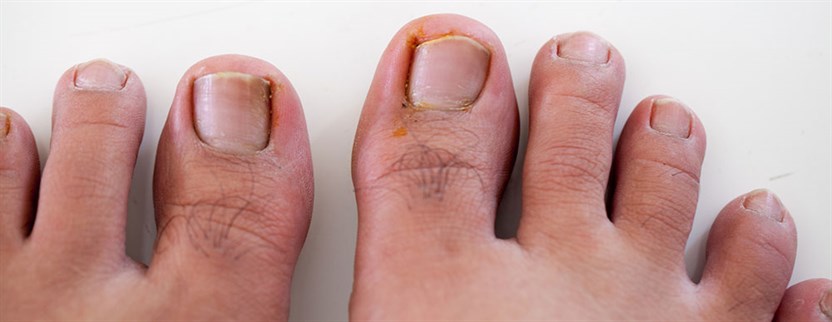
The toe nail that appears ingrown due to inflammation of the flesh around the nail is termed as ingrown toe nail. The nail embeds and becomes soft under the flesh (that has inflamed around it). This condition is medically termed as Onychocryptosis or Unguis Incarnates.

SYMPTOMS
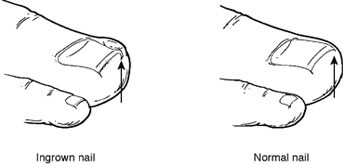 Symptoms of an ingrown nail include; pain on the margins of the nail , unbearable pain while wearing tight footwear and sensitivity to slight pressure of any kind. Bumping of an affected toe can lead to very sharp and unendurable pain as the tissue gets punctured further by the nail. An ingrown toenail is a common disorder that usually, though not necessarily impacts the outer edge of the big toe.
Early in the course of an ingrown toenail, the end of the toe becomes reddish and painful with mild swelling. There is no pus or discharge. It may feel warm to the touch, but the patient may not have fever. Later, extra skin and tissue will grow around the sharp point of the nail. A yellowish discharge may begin that indicates, body's response to the trauma of the nail irritation. In severe conditions, the swelling becomes worse and there may be white or yellow colored discharge from the area.
CAUSES
Tight fitting shoes or high heels cause the toes to be compressed together and pressurize the nails to grow abnormally. Improper nail trimming can also cause the corners of the nail to dig into the skin. Fungal infections of the nail may also develop a thickened toe nail. An acute injury near the nail or any recurring damage to the nail (during active sports) may also lead to an ingrown nail.
MEDICAL TREATMENT
A doctor may simply try to file or cut the nail down the center to change the shape of the nail as it grows. If any extra tissue has grown around the inflamed area of skin, the doctor may choose to remove the same to help it heal faster. The doctor numbs the area before removal of any tissue. If no acute infection is diagnosed, then the nail is elevated and basic treatment is recommended that includes wearing warm soaks, proper shoes, and frequent cleaning of the nails.
Several types of splints can also be used. These protect the skin from the sharp corner of the nail. Some of the most common types of splints include cotton wicks, plastic strips, plastic tubes down the side of the nail, and various glue-like substances (resins).
What is an ingrown toenail?
An ingrown toenail is a common foot condition that occurs when the edge or corner of a toenail grows into the surrounding skin instead of over it. This most often affects the big toe and can cause pain, redness, swelling, and tenderness along the nail border. In some cases, the area may become infected, leading to drainage or increased discomfort. Ingrown toenails can develop gradually and may worsen over time if not properly treated, especially when pressure from footwear continues to irritate the affected area.
What causes an ingrown toenail?
Ingrown toenails can develop for several reasons, most commonly due to improper nail trimming or pressure on the toes. Cutting toenails too short or rounding the edges can encourage the nail to grow into the skin. Wearing tight or narrow shoes that crowd the toes is another major contributing factor. Toe injuries, repetitive pressure from sports, and naturally curved toenails can also increase the risk. In some cases, genetics or underlying nail conditions may make certain individuals more prone to ingrown toenails.
What are the symptoms of an ingrown toenail?
The most common symptoms include pain and tenderness along one or both sides of the toenail. The surrounding skin may appear red, swollen, and inflamed, and the area may feel warm or sensitive to pressure. As the condition progresses, infection can develop, leading to pus, increased pain, and worsening swelling. Many people notice discomfort when wearing shoes or walking. If left untreated, symptoms can become more severe and may interfere with daily activities and mobility.
How serious is an ingrown toenail?
In many cases, an ingrown toenail starts as a mild condition, but it can become more serious if it is ignored or becomes infected. Infection can spread to the surrounding tissue, causing increased pain, drainage, and delayed healing. People with diabetes, poor circulation, or weakened immune systems are at higher risk of complications. While mild cases may be managed with proper nail care and footwear changes, persistent or worsening symptoms should always be evaluated by a podiatrist to prevent further issues.
Can an ingrown toenail go away on its own?
Mild ingrown toenails may improve on their own if pressure on the toe is reduced and proper foot care is followed. However, many cases persist or worsen without professional treatment, especially if the nail continues to grow into the skin. Home care may temporarily relieve symptoms, but it does not always correct the underlying problem. If pain, redness, or swelling continues for more than a few days, or if signs of infection appear, professional treatment is usually required for proper healing.
What complications can occur from an ingrown toenail?
If left untreated, an ingrown toenail can lead to infection of the surrounding skin, known as paronychia. This may cause pus, increased swelling, and significant pain. In more severe cases, the infection can spread deeper into the toe and surrounding tissues, making treatment more complex. Chronic ingrown toenails may also lead to thickened skin, overgrowth of tissue around the nail, and recurring episodes. People with diabetes or circulation issues are at higher risk of serious complications and delayed healing.
How is an ingrown toenail treated?
Treatment depends on the severity of the condition. Mild cases may be managed with warm soaks, proper nail trimming, footwear changes, and avoiding pressure on the toe. More persistent or painful cases may require a podiatric procedure to remove part of the nail and relieve pressure. If infection is present, additional treatment may include antibiotics or antiseptic care. The goal of treatment is to reduce pain, remove irritation from the nail edge, and prevent the condition from recurring.
When should I see a podiatrist for an ingrown toenail?
You should see a podiatrist if you experience persistent pain, swelling, redness, or signs of infection such as pus or worsening inflammation. Professional care is especially important if the condition keeps coming back or does not improve with home treatment. Individuals with diabetes, nerve damage, or poor circulation should seek care early, even for mild symptoms. Prompt treatment can prevent complications, reduce pain, and help restore normal nail growth more effectively.
How can ingrown toenails be prevented?
Ingrown toenails can often be prevented with proper foot care habits. This includes trimming toenails straight across rather than rounding the edges, keeping nails at a moderate length, and avoiding cutting them too short. Wearing shoes that fit properly and provide enough room for the toes is also important. Protecting the feet from injury and maintaining good hygiene can further reduce risk. For people prone to recurring ingrown toenails, regular professional nail care may help prevent future problems.
Can ingrown toenails keep coming back?
Yes, ingrown toenails can recur, especially if the underlying cause is not addressed. Factors such as nail shape, improper trimming habits, or ongoing pressure from footwear can lead to repeated episodes. In some cases, part of the nail root may continue to grow into the skin, causing chronic issues. When recurrence happens frequently, a podiatrist may recommend a minor procedure to prevent the problematic portion of the nail from regrowing, helping to provide a more permanent solution.