Hammertoe is the deformity of the second, third, fourth and fifth toes. In this condition, the toe is bent at the middle joint, so that it resembles a hammer. Initially, hammer toes are flexible and can be rectified with simple measures but if left untreated, they may become permanent and require surgery.
People with hammer toe may develop corns or calluses on the top of the middle joint of the toe or on the tip of the toe.
CAUSES
 One of the common reasons for hammer toes is wearing ill fitting shoes. For instance; If the toe is too long and is forced into a cramped position in the shoe, it may result in hammertoe. Muscle imbalance often in combination with one or more other factors may also lead to hammer toes.
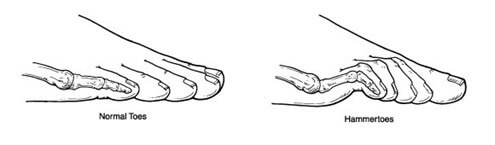
In some cases, hammertoe is the result of an earlier trauma or injury to the toe while in others, it may be due to a genetic problem.
SYMPTOMS
The general symptoms observed for Hammertoe include :
- Pain or irritation of the affected toe while wearing shoes.
- Corn and calluses on one toe or between two toes or on the ball of the foot. These corns may be hard or soft and develop due to constant friction against the shoe.
- Inflammation, redness or a burning sensation.
- Contracture of the toe (distortion of muscular or connective tissue)
- Formation of open sores in severe cases.
DIAGNOSIS
Hammertoes are quite visible and can be diagnosed by simply checking the shape of the foot (which appears like a hammer) However, to arrive at a final conclusion, the foot and ankle surgeon does a thorough examination of the symptoms and the foot and contractures, if any. X Ray reports may be required to determine the degree of the deformities and notice any changes that might have taken place.
TREATMENT
Treatment options depend upon the severity of the problem and other related factors :
- Initial treatment starts by wearing shoes that have soft, roomy toe boxes. Shoes should be one and a half inch longer than the longest toe. Tight, narrow and high heeled shoes must be avoided.
- The doctor may suggest few toe exercises to stretch and strengthen the muscles. For example, while resting, a towel can be put under the feet and toes can be used to crumple it.
- Finally the doctor may recommend commercially available straps, cushions or non medicated corn pads to relieve the symptoms.
Hammertoe can also be corrected by surgery if initial measures fail to produce the desired results. Surgery is done on an out patient basis with local anesthesia. The actual procedure depends on the kind and extent of the deformity. After the surgery, there may be some stiffness, swelling and redness and the toe may become slightly longer or shorter than before. The patient will be able to walk, but should not plan any long hikes while the toe gets healed, and should keep the foot elevated as much as possible.
What is a hammertoe?
A hammertoe is a foot deformity where one of the smaller toes (usually the second, third, or fourth toe) bends abnormally at the middle joint, causing it to look like a hammer. In many cases, the toe may start off flexible but gradually becomes stiff over time as the tendons tighten. This condition can affect one or multiple toes and often develops due to muscle imbalance, joint stress, or long-term pressure on the forefoot. If left untreated, hammertoes can become rigid and more difficult to manage, sometimes requiring medical intervention.
What causes hammertoes?
Hammertoes are commonly caused by an imbalance in the muscles, tendons, and ligaments that normally keep the toe straight. One of the most frequent contributing factors is wearing tight or narrow shoes that crowd the toes, especially high heels or footwear with a small toe box. Other causes include foot structure problems such as flat feet or high arches, injury to the toes, arthritis, and genetic predisposition. Over time, these factors can force the toe into a bent position and shorten the surrounding tendons, making the deformity more permanent.
What are the symptoms of hammertoes?
The most common symptom of a hammertoe is a visibly bent toe that does not lie flat. Patients often experience pain or irritation when wearing shoes, especially over the top of the affected toe where friction occurs. Corns or calluses may form due to repeated rubbing, and the toe may become stiff or difficult to move. In more advanced cases, the toe can become rigid, and walking or standing for long periods may become uncomfortable due to pressure on the forefoot.
Can hammertoes get worse over time?
Yes, hammertoes are typically progressive if not treated. In the early stages, the toe may still be flexible and can sometimes be straightened manually. However, with continued stress or improper footwear, the tendons and ligaments can tighten, causing the toe to become permanently fixed in a bent position. As the condition worsens, pain, corns, calluses, and difficulty walking may increase. Early treatment is important to slow progression and maintain flexibility in the affected toe.
What causes pain in hammertoes?
Pain from hammertoes is usually caused by pressure and friction. The bent joint often rubs against shoes, leading to irritation, inflammation, and skin thickening such as corns or calluses. Additionally, the altered position of the toe changes how weight is distributed across the forefoot, which can place extra stress on surrounding joints and tissues. This uneven pressure can make walking or standing uncomfortable, especially during long periods of activity or when wearing restrictive footwear.
How are hammertoes diagnosed?
A podiatrist typically diagnoses hammertoes through a physical examination of the foot. The doctor will assess toe alignment, flexibility, pain levels, and any associated skin changes such as corns or calluses. In some cases, imaging like X-rays may be used to evaluate joint damage or rule out other conditions. Diagnosis also includes evaluating footwear habits and foot structure, as these factors often contribute to the development of the deformity.
What non-surgical treatments are available for hammertoes?
Many cases of hammertoes can be managed with conservative treatments, especially in the early stages. These may include wearing wider shoes with a spacious toe box, using orthotic devices to improve foot alignment, toe padding to reduce friction, and exercises to maintain flexibility. Anti-inflammatory medications may also help reduce pain and swelling. These treatments aim to relieve pressure on the affected toe and prevent the condition from worsening.
Can custom orthotics help hammertoes?
Yes, custom orthotics can be very helpful for managing hammertoes. They work by improving foot alignment and redistributing pressure away from the affected toes. This can reduce pain, prevent excessive friction, and slow the progression of the deformity. Orthotics are especially beneficial when hammertoes are caused or worsened by underlying structural issues such as flat feet or high arches. They are often used alongside footwear changes for better long-term results.
When is surgery needed for hammertoes?
Surgery may be recommended when hammertoes become rigid, painful, and unresponsive to conservative treatments. Surgical options aim to correct the alignment of the toe, relieve pressure, and restore function. The specific procedure depends on the severity of the deformity and whether joint damage is present. A foot specialist will evaluate the condition carefully before recommending surgery, and most cases are only considered after non-surgical methods have been tried.
How can hammertoes be prevented?
Hammertoes can often be prevented by wearing properly fitting shoes with enough room in the toe box, avoiding high heels for extended periods, and maintaining good foot mechanics. Regular foot exercises that strengthen and stretch the toes may also help reduce risk. Addressing early signs such as toe discomfort or mild bending can prevent progression. For individuals with underlying foot structure issues, early use of orthotics may help reduce long-term complications.